
5 Ways to Help Your Child Stay Motivated in Martial Arts
Updated on July 13th, 2026 at 02:37 pm
Starting martial arts is an exciting experience for children. Learning new moves, building confidence, and earning new belts can make every class feel rewarding from the start. However, as training becomes more challenging and techniques require greater focus and discipline, some children may begin to lose motivation. The good news is that parents can play an important role in helping their child stay motivated, engaged, and excited about their martial arts journey.
Martial arts training can also play a meaningful role in a child’s emotional development, discipline, focus, and confidence. Understanding what drives motivation, and what causes it to fade, helps parents support long-term success both in training and in everyday life.
Quick Takeaways: How to Keep Kids Motivated In Martial Arts
- Set small skill-based goals, not just belt goals
- Keep a consistent training schedule without pressure
- Praise effort, not outcomes
- Stay involved but avoid over-coaching
- Address resistance with curiosity, not conflict
Why Kids Lose Motivation in Martial Arts Training (Common Causes Explained)
Even children who begin martial arts with excitement and enthusiasm can experience periods where their motivation starts to fade. Understanding the common reasons behind these changes can help parents provide the right encouragement and support to keep their child engaged.
Lack of Visible Progress
Children often want to see quick results from their hard work. When improvements in technique, flexibility, or strength happen gradually, they may feel discouraged or believe they are not getting better. Martial arts require patience and consistent practice, which can sometimes be difficult for younger students to recognize.
Plateaus in Belt Advancement
Earning new belts is exciting and rewarding for many martial arts students. However, there are times when advancement slows as skills become more advanced and expectations increase. If a child feels stuck at the same belt level for too long, they may lose confidence or become frustrated with the process.
Competing Distractions
As children grow older, they often face more demands on their time and attention. School responsibilities, sports, social activities, video games, and screen time can all compete with martial arts training. When schedules become busy, maintaining long-term motivation may become more challenging.
Feeling Overwhelmed or Lacking Confidence
Some children may struggle when classes become more physically or mentally demanding. Learning complex techniques, sparring with more experienced students, or comparing themselves to others can sometimes create feelings of self-doubt. Without encouragement and reassurance, these challenges may cause a child to lose interest or feel intimidated in class.
How Parents Can Motivate Kids in Martial Arts Training
Keeping children motivated in martial arts often comes down to encouragement, patience, and creating a positive experience both inside and outside the dojo. By understanding your child’s challenges and celebrating their progress along the way, you can help them stay confident, engaged, and excited to continue their martial arts journey.
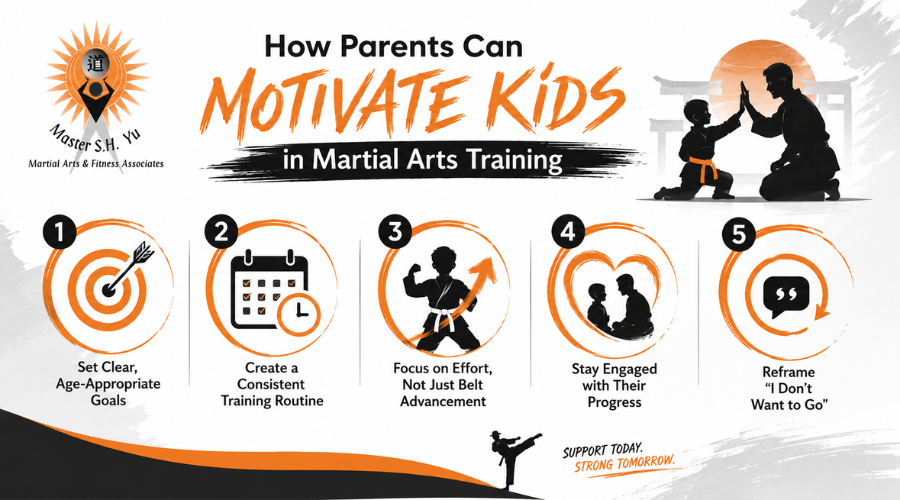
1. Set Clear, Age-Appropriate Goals
Treat belt advancements as short-term milestones rather than the only measure of success. Help your child set smaller, skill-based goals, such as improving a specific kick, mastering a form, or building confidence during sparring. Acknowledging their progress and encouraging them to demonstrate newly learned techniques can help celebrate small victories, build confidence, and maintain motivation over time.
This approach supports kids’ martial arts motivation by shifting focus from outcomes to personal growth and consistent improvement.
2. Create a Consistent Training Routine
Children thrive in routine. Consistent training helps them build discipline and lifelong habits. They learn that steady effort yields measurable growth. However, it’s important to balance the martial arts with school and other extracurricular activities to prevent burnout and preserve their joy for the discipline.
Parents who reinforce their children’s attendance without pressure turn martial arts classes into a natural part of their normal routine. Lay out their martial arts uniform the night before class. Review new techniques with them at home and discuss what they learned after each class.
A structured routine also strengthens discipline and focus in children, which are key long-term benefits of youth martial arts training.
3. Focus on Effort, Not Just Belt Advancement
Children feel encouraged when parents notice their achievements, big and small. Praise discipline, focus, and improvement. Challenges and plateaus in martial arts training are inevitable, but focusing on the children’s effort reinforces the importance of progress instead of outcome and prevents frustration.
This mindset helps children develop resilience and reduces comparison with other students, which is a common cause of discouragement in martial arts programs.
4. Stay Engaged with Their Progress
Parental involvement can have a powerful impact on a child’s motivation and confidence in martial arts. Attending classes, watching belt tests, and showing genuine interest in their progress helps children feel supported and encouraged throughout their journey. Parents can also create opportunities for practice at home and ask open-ended questions about the techniques or skills their child is learning, giving them a chance to share their knowledge and accomplishments.
At the same time, it is important to allow instructors to lead the training process. Coaching from the sidelines or offering detailed critiques after class can create confusion and unintentionally undermine the instructor’s guidance. Martial arts is centered on personal growth, discipline, and self-improvement, so comparing a child’s progress to other students can lead to frustration and discourage their enthusiasm for training.
Instead, encourage reflection and a growth mindset by asking thoughtful questions after class, such as, “What do you think you improved on today?” or “What would you like to work on next time?” These conversations help children evaluate their own progress, develop confidence, and learn how to view challenges as opportunities for growth.
5. Reframe “I Don’t Want to Go” (The 3-Question Method)
Children who seem unmotivated to attend martial arts classes are not always ready to quit altogether. In many cases, they may be reacting to temporary frustrations, stress, or uncomfortable situations that are affecting their enthusiasm. Parents can better understand the root of the issue by asking supportive, open-ended questions such as, “What part of class are you not looking forward to today?”
Outside factors can also impact motivation. Challenges at school, friendship issues, lack of sleep, or other personal stresses may distract children and make it harder for them to feel excited about training. This is one of the most common reasons parents search for “why does my child not want to go to martial arts class” or “how to keep kids in karate long term.”
Read: How to Preserve Your Motivation During Martial Arts Training
Common Mistakes Parents Make with Kids in Martial Arts
One of the most overlooked factors in kids’ martial arts motivation is not the child’s ability, but how parents respond to challenges during training. Small shifts in mindset at home can make a significant difference in long-term engagement and enjoyment.
- Focusing too much on belt progression instead of skill development and personal growth
- Comparing children to classmates rather than tracking individual improvement over time
- Pressuring attendance instead of encouraging consistency and routine in a supportive way
- Over-coaching outside of class, which can create confusion and conflict with instructor-led training
When parents shift their focus toward effort, consistency, and confidence-building, children are far more likely to stay engaged and enjoy their martial arts journey long term.
When Parents Should Encourage Persistence vs. Rest in Martial Arts
Parents best support their child’s training when they know when to push through and when to pause and investigate. Boredom, tiredness, and being intimidated by a new technique are temporary hurdles that can be overcome. A friend who drops out is also a situation to push through.
Physical pain, however, must be addressed immediately to prevent worsened injuries or complications. Parents should take heed and make serious inquiries when a child fears a specific instructor or student. Persistent tears and changes at school likewise warrant pause and investigation.
Encourage a Growth Mindset Through Martial Arts
Setbacks in the martial arts are common. Parents teach their children resilience by asking questions that foster a growth mindset. Instill in young students that failures are opportunities to grow. Over time, they develop resilience and confidence. In turn, they are rewarded with real-life discipline and enhanced school performance. Martial arts is widely recognized for helping children develop discipline, emotional regulation, and focus, especially when practiced consistently over time.
Kids Martial Arts Classes from Master S.H. Yu
Encouraging children in martial arts training is half the battle. The other is choosing a martial arts school that provides quality training to kids of all ages. Master SH Yu Martial Arts provides structured kids martial arts programs designed to build confidence, discipline, and focus in a safe and supportive environment. Lessons at Master SH Yu Martial Arts instill self-esteem, sharpen mental acuity, and promote emotional stability among its youngest students.
With years of experience teaching children’s martial arts programs, instructors at Master SH Yu Martial Arts understand how motivation naturally rises and falls during training, and how to guide students through those phases effectively. Master S.H. Yu Martial Arts offers classes to children ages five and up at our distinguished Oak Park, Illinois, dojhang. Explore kids’ martial arts classes in Oak Park designed to build confidence, discipline, and focus in a supportive environment.
Kids Martial Arts FAQs
What age is best to start martial arts for kids?
Many martial arts programs accept children as young as 3 to 5 years old, depending on the school and style. At this age, classes typically focus on basic coordination, listening skills, discipline, and confidence-building through fun activities. As children grow older, they can begin learning more advanced techniques and structured training.
How do I motivate my child who wants to quit martial arts?
Start by talking with your child to understand why they feel discouraged or uninterested. Sometimes children experience temporary frustration, fatigue, or self-doubt rather than a true desire to quit. Encouraging small goals, celebrating progress, attending classes to show support, and reminding them how accomplished they feel after training can often help rebuild motivation.
How often should kids attend martial arts classes?
Most children benefit from attending martial arts classes two to three times per week. This schedule allows them to build skills consistently without becoming overwhelmed. The ideal frequency may vary based on your child’s age, attention span, experience level, and other activities.
Does martial arts help with ADHD or focus issues?
Martial arts can be beneficial for many children with ADHD or focus-related challenges because classes emphasize structure, discipline, listening skills, and self-control. Repetitive movements, goal-setting, and consistent routines may also help improve concentration, confidence, and emotional regulation over time.
How long does it take for kids to earn their first belt?
The timeline for earning a first belt varies by martial arts school and program, but many children earn their first promotion within a few months of consistent attendance. Advancement typically depends on factors such as participation, effort, skill development, and understanding of basic techniques.