
How Often Should You Train in Martial Arts? Optimal Schedule for Beginners, Kids, and Competitors
Martial arts mastery comes from consistent, focused training, not random effort. While most students see steady progress training 2 to 4 times per week, the ideal schedule varies based on age, experience, and goals. Beginners benefit from building habits without overdoing it, whereas competitive athletes need higher-volume training balanced with proper recovery. This guide breaks down the optimal training frequency for every level, helping you improve faster, avoid burnout, and train smarter for long-term success.
Quick Takeaways: Training Frequency
Progress comes from consistent repetition and recovery, not from training every day without rest.
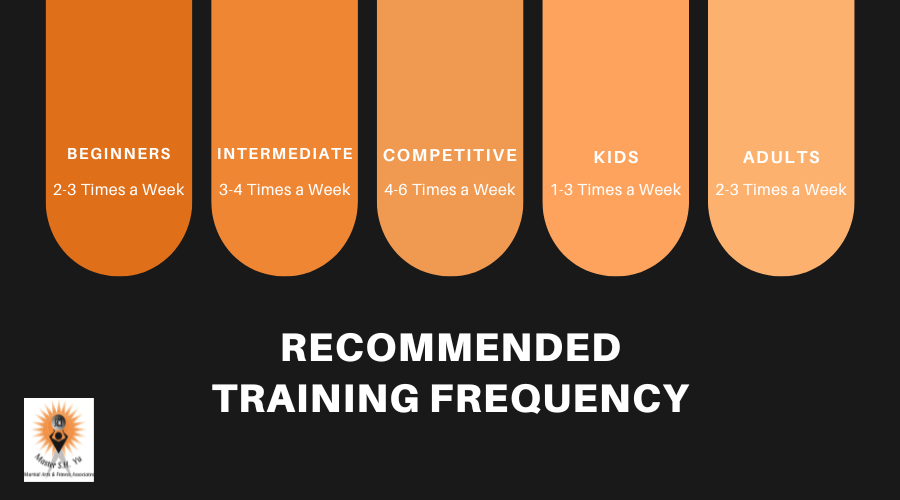
- Beginners: 2–3 times per week
- Intermediate students: 3–4 times per week
- Competitive athletes: 4–6 times per week
- Kids: 1–3 times per week, depending on age
- Adults training for fitness: 2–3 times per week
How Many Times Per Week Should You Train in Martial Arts?
Martial arts students reach proficiency through consistent, focused training. There is no universal formula because physical ability, goals, and schedule differ for every student. However, general guidelines help most students improve steadily.
Those training for general fitness benefit from 45 to 60 minutes of martial arts 2 to 3 times per week. Twelve weeks is often enough for young adults to see measurable improvements in cardiovascular endurance and muscle strength.
Students focused on self-defense engage in scenario-based simulations. Training 1 to 2 times per week can significantly increase reaction time and situational awareness. Emphasis should stay on sharpening techniques rather than accumulating hours, which helps prevent overwhelm and maintains skill quality.
Tournament preparation requires greater volume. One-hour sessions, 3 to 5 times per week, are common for competitive students. Structured training that includes recovery periods reduces injury risk and supports long-term performance.
Age is another key factor. Children benefit from 2 to 3 classes per week, allowing time to build muscle memory without interfering with school and family responsibilities. Experienced adults may increase frequency to 3 to 4 sessions weekly, provided recovery stays a priority.
Ideal Martial Arts Training Frequency by Skill Level
Complete Beginners
New students benefit most from building consistency and mastering the fundamentals of martial arts. Training 2 to 3 times per week reinforces technique, develops muscle memory, and improves conditioning without excessive soreness. Quality instruction matters more than intensity. Regular attendance, basic home practice, and focused learning create a strong foundation.
Beginners should prioritize:
- Consistent weekly attendance
- Clean technique repetition
- Rest between sessions
- Learning over speed
Intermediate Students
Once core skills are reliable, training volume often increases to 3 to 4 sessions per week. This stage emphasizes timing, combinations, defense, and endurance. Cross-training, drilling outside class, and light sparring accelerate improvement. Recovery becomes increasingly important.
Intermediate focus areas:
- Refining timing and precision
- Structured sparring
- Mobility and flexibility work
- Balancing effort and recovery
Advanced or Competitive Students
Athletes pursuing competition or mastery typically train 4 to 6 days per week, sometimes with multiple sessions per day. Training includes technical drilling, situational sparring, conditioning, and strategy work. At this level, recovery protocols such as mobility training, nutrition, hydration, and sleep are essential. Small improvements create meaningful performance gains.
Advanced training priorities:
- High-level technical refinement
- Sport-specific conditioning
- Active recovery
- Injury prevention
How Often Should Kids Train in Martial Arts?
Children progress differently from adults because their attention spans, physical development, and school responsibilities vary by age. The key is finding a schedule that builds skills, discipline, and confidence while keeping training fun and sustainable.
Preschool and Early Elementary Ages
For younger children, 1–2 classes per week is usually ideal. At this stage, martial arts focus on listening skills, coordination, balance, and basic movements rather than intense physical conditioning.
Short, positive experiences help kids stay excited about coming back. Too many classes can lead to fatigue or burnout, while a manageable routine keeps motivation high and supports steady improvement.
School-Age Children
As kids grow, they are better able to retain instruction, follow multi-step techniques, and handle longer training sessions. 2–3 classes per week is a common and effective schedule.
This frequency helps reinforce fundamentals, improve fitness, and develop confidence while still leaving time for homework, family activities, and other interests. Some students may also begin light sparring or more focused skill development.
Teenagers
Teenagers can often train at a level closer to adults, depending on their maturity and goals. Many benefit from 3–5 sessions per week, especially if they are working toward advanced ranks or considering competition.
At this age, students can handle more intense conditioning, detailed technical instruction, and independent practice. Maintaining balance with academics and rest remains essential for long-term success.
How Often Should Adults Train in Martial Arts?
Adults pursuing fitness and skill development progress steadily with 2 to 3 weekly sessions. This schedule allows recovery while building endurance and technique. As conditioning improves, some adults increase to 3 to 4 sessions per week. The right frequency depends on energy levels, goals, and lifestyle, but recovery always determines sustainability.
Can You Train Too Much? Signs of Overtraining in Martial Arts
Training harder isn’t always better. When intensity exceeds recovery, burnout can occur, slowing progress and increasing injury risk. Watch for these warning signs:
Physical Signs of Overtraining
- Persistent fatigue: Feeling constantly tired even after rest days
- Declining strength or endurance: Noticeable drop in performance during drills or workouts
- Skill regression: Previously mastered techniques feel sloppy or difficult
- Delayed recovery: Soreness or minor injuries take longer than usual to heal
Mental Signs of Overtraining
- Loss of motivation: Dreading training sessions or feeling uninterested
- Difficulty concentrating: Struggling to focus during drills or practice
- Irritability or frustration: Increased emotional tension or impatience
- Emotional drain: Feeling overwhelmed or mentally exhausted from training
Why Recovery is Essential
- Muscle repair: Microscopic tears in muscle fibers heal and strengthen
- Joint and tissue recovery: Connective tissues recover to prevent injury
- Nervous system reset: Coordination and mental sharpness improve
- Energy and clarity restoration: Motivation and focus return after proper rest
Key takeaway: Rest is not a break from progress. Combining focused training with adequate recovery transforms training stress into real performance gains.
How Long Should a Martial Arts Session Be?
Most effective martial arts sessions last 45 to 90 minutes. Shorter sessions emphasize technique and drilling, while longer sessions may include conditioning and sparring. Longer sessions do not automatically equal better progress. Focused, efficient practice produces superior results.
How Long Does It Take to See Results from Martial Arts Training?
Students see results, like reduced stress, improved coordination, and better endurance, within 1 to 2 months of regular martial arts training. Visible fitness changes appear within 3 to 6 months. Achieving proficiency, however, requires a commitment of 1 to 3 years of consistent training.
What Martial Arts Instructors Recommend
Experienced instructors emphasize consistency, technical precision, and recovery. Training frequency should match goals without sacrificing longevity. Professional coaching philosophy prioritizes habit formation over extreme workloads. Sustainable training keeps students progressing for years instead of months.
This philosophy is reflected in the structured programs at Master S.H. Yu Martial Arts, where students train according to level, age, and goals rather than a one-size-fits-all schedule.
Choosing the Right Martial Arts Schedule for Your Goals
When choosing a martial arts training schedule, start by defining your goals. Are you training for fitness, competition, self-defense, or personal growth? From there, look honestly at your availability and begin conservatively. A manageable routine encourages regular attendance, builds consistency, and leaves room for essential recovery days.
Martial arts classes are flexible and can fit into the weekly schedules of most adults and children. If you’re ready to develop lifelong skills, strengthen discipline, and pursue true mastery, consider training at Master S.H. Yu Martial Arts.
We provide high-quality instruction for adults, teens, and kids. Adult students can explore a wide range of disciplines, including Tae Kwon Do, Judo, Kumdo, Hapkido, and Karate. For those interested in weapons training, we also teach Kumdo, the traditional art of swordsmanship.
No matter your martial arts goals, our highly experienced instructors can help you achieve them. We proudly offer classes to residents of Oak Park, Illinois, and the surrounding areas. Visit our dojhang today to learn more and see firsthand the benefits of fitting martial arts training into your schedule.
Frequently Asked Questions (FAQs)
How does training frequency affect skill retention in martial arts?
Consistent, spaced training improves muscle memory and technique retention. Too few sessions may slow progress, while excessive training without recovery can cause burnout and reduced skill sharpness.
Is cross-training in multiple martial arts beneficial for skill development?
Yes. Cross-training can improve agility, timing, and adaptability by exposing students to different techniques and movement patterns. However, it should complement—not replace—focused practice in a primary discipline.
How do rest days improve martial arts performance?
Rest allows muscles and joints to recover, prevents overuse injuries, and helps the nervous system consolidate new skills. Students often see faster improvements after incorporating strategic rest days.
Can martial arts training improve mental focus and discipline?
Absolutely. Regular practice trains the mind as well as the body. Students develop improved concentration, patience, emotional resilience, and the ability to follow multi-step instructions.