

Karate vs Taekwondo: Key Differences Explained
Updated on January 20th, 2026 at 04:43 pm
Martial arts offer practical self-defense skills while building discipline, confidence, agility, and physical fitness. Among the most popular styles worldwide are Karate and Taekwondo. For those considering martial arts training, understanding the differences between these two disciplines is crucial for choosing the right path.
Both Karate and Taekwondo have millions of practitioners globally. In the U.S., Karate has an estimated 3 to 4 million practitioners, while Taekwondo has nearly 3 million practitioners in the United States. Their popularity reflects their accessibility, effectiveness, and benefits for beginners and experienced students alike.
This guide outlines the key differences between Karate and Taekwondo, including history, philosophy, techniques, belt systems, competitions, and training styles. By understanding these different martial arts practices, prospective students can choose the path that best aligns with their goals and interests.
Karate vs Taekwondo: Origins and History
The Origins of Karate
Karate originated in Okinawa, Japan, over 500 years ago. It was developed as a weapon-free self-defense system to maintain peace and prevent conflict. Over time, Karate evolved into a discipline emphasizing both physical skills and spiritual development.
The Origins of Taekwondo
Taekwondo traces its roots to the ancient 3 Kingdoms of Korea, dating back to 50 BCE. Its name translates to “kick” (Tae), “punch” (Kwon), and “do” (way of life), reflecting its focus on full-body defense techniques. Taekwondo’s popularity skyrocketed after gaining Olympic recognition in 2000.
Cultural Influence
Karate embodies Okinawan ideals: calm, deliberate movements, precision, and respect. Taekwondo highlights Korean resilience, featuring rapid, high kicks and dynamic footwork while emphasizing energy, athleticism, and community harmony.
Key Philosophies and Mindset of Karate and Taekwondo
Both martial arts instill discipline and confidence, but their focus differs:
Karate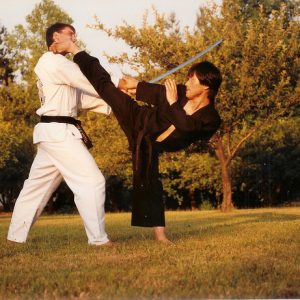
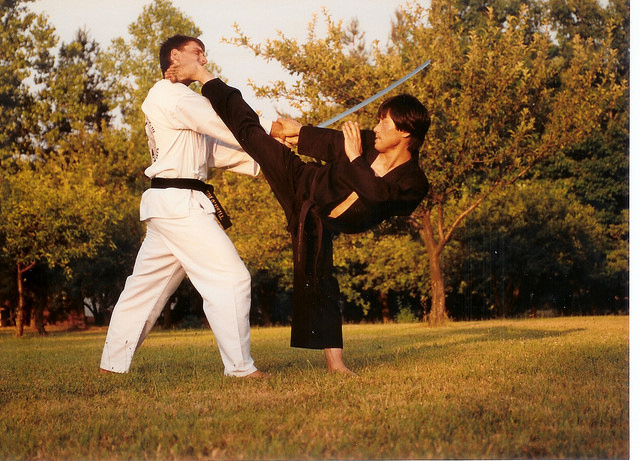
- Emphasizes self-control, respect, and kata (forms)
- Focus on mental stillness and precision
- Training develops internal strength and mindfulness
Taekwondo
- Values speed, agility, and high kicks
- Encourages a competitive, energetic mindset
- Training develops dynamic athleticism and motion control
| Aspect | Karate | Taekwondo |
|---|---|---|
| Philosophy | Discipline, respect, and self-defense | Speed, agility, competition |
| Mindset | Mental stillness | Energy and motion |
| Techniques | Hand strikes, blocks, kata | Kicks, fast footwork, sparring |
Karate vs Taekwondo: Techniques and Sparring Styles
Karate competitions typically include point sparring, kata, and kumite, with an emphasis on precision, technique, and control. Success in these events depends on executing movements accurately and demonstrating mastery of form.
Taekwondo tournaments, by contrast, follow Olympic-style rules with electronic scoring systems, rewarding speed, high kicks, and continuous movement. Overall, Karate emphasizes technical mastery and careful execution, while Taekwondo prioritizes agility, rapid motion, and dynamic offensive strategies.
Belt Systems in Karate and Taekwondo
Karate and Taekwondo belts start with white; colored belts are awarded as students progress. Lower belts are attained within 3 to 6 months of practicing and honing skills. Although both disciplines use colored belts to track progress, focus and progression differ:
Karate Belt Progression
- White to black emphasizes foundational techniques and kata
- A black belt requires years of practice and mastery
Taekwondo Belt Progression
- White to black emphasizes sparring and competition readiness
- A black belt can be earned in as little as three years, with mastery continuing beyond rank. Average progression to Black Belt at Master S.H. Yu Martial Arts is 4 years of dedicated training.
Read: What Do the Colors of Traditional Martial Arts Belts Mean?
Training and Practice Differences
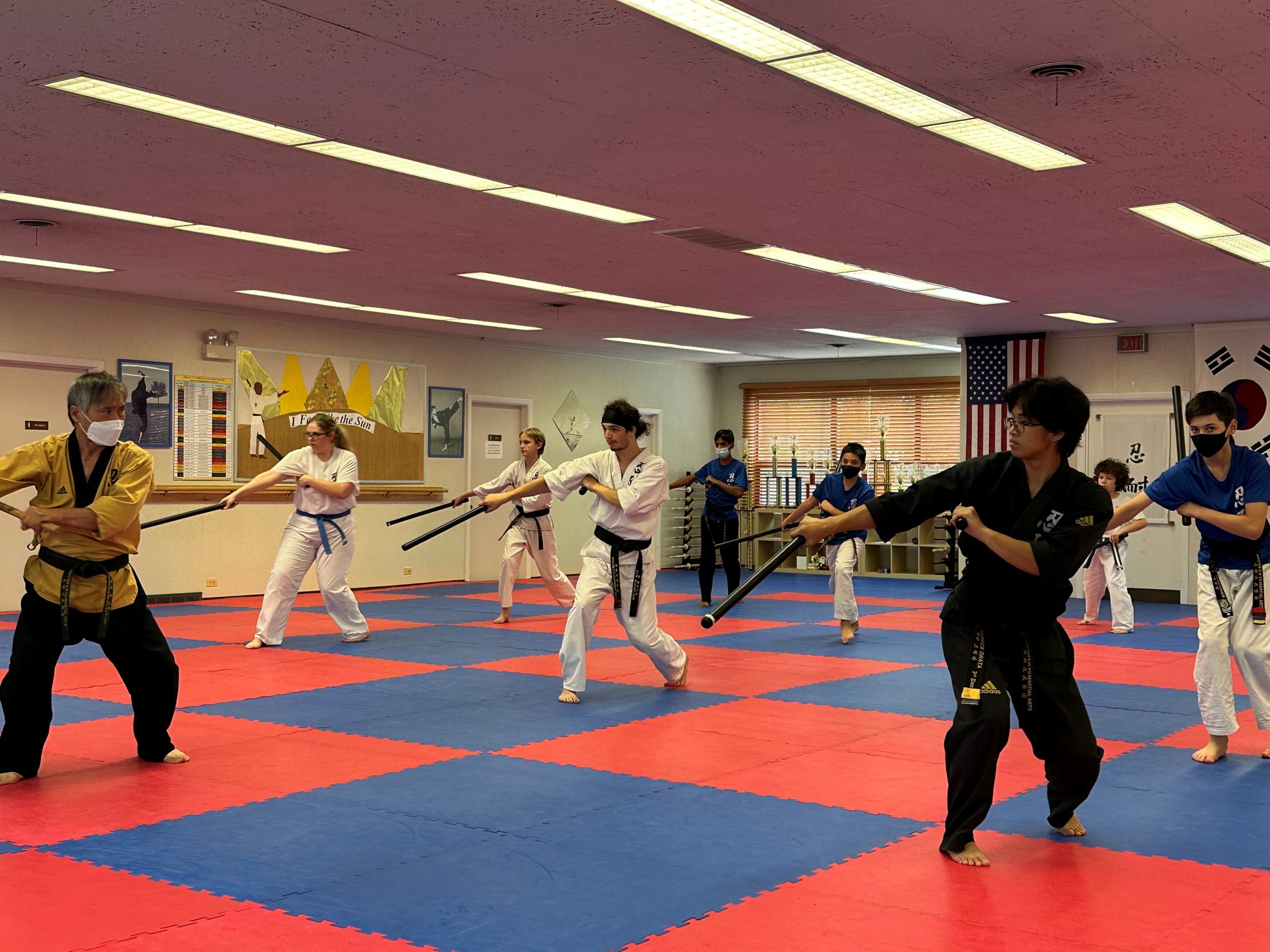
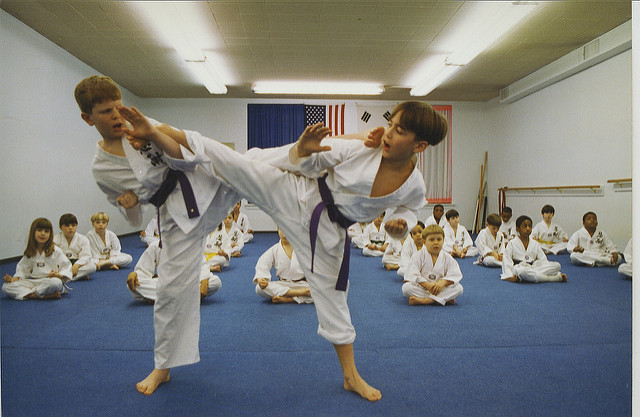
Martial arts classes also differ in their structure. Karate training places a strong emphasis on solo drills, allowing students to develop solid fundamentals, precise techniques, and disciplined movement. Taekwondo training, by contrast, places a greater emphasis on partner exercises and sparring, enabling students to apply techniques in dynamic, real-time scenarios.
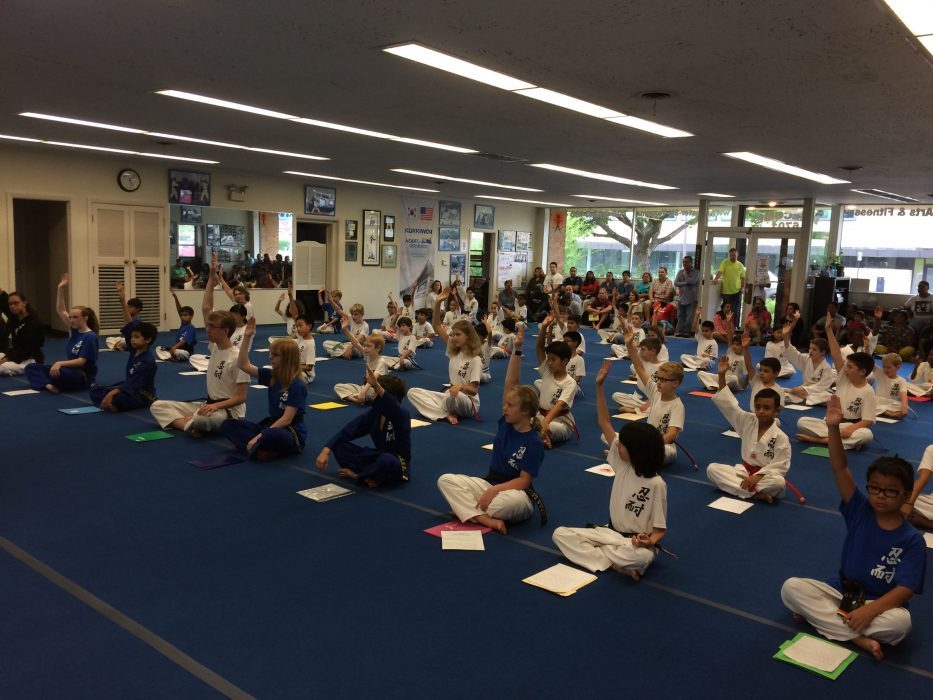
Despite these differences, both Karate and Taekwondo share common traditions. Students wear traditional uniforms and typically attend one-hour classes two to three times per week, providing consistent practice while balancing school, work, and family commitments.
Karate and Taekwondo Competitions
Karate competitions typically feature point sparring, kumite, and kata, with high scores awarded for well-executed strikes, particularly kicks delivered to specific target areas. These events emphasize control, precision, and technical mastery as much as physical ability.
Taekwondo tournaments, on the other hand, follow Olympic-style sparring rules with electronic scoring systems and clearly defined tournament regulations. These rules encourage fast footwork, powerful kicking techniques, and constant movement. As a result, competition training in both disciplines demands a high level of intensity, conditioning, and dynamic body control.
Which Martial Art is Right for You?
Martial arts are accessible to students of all ages, physical abilities, and personal goals. Many people enroll in Karate or Taekwondo to improve fitness, learn practical self-defense skills, develop discipline, or compete in exciting tournaments. Because each style offers unique benefits, trying both before committing to one can help students make a more informed choice. Students should also consider their goals in martial arts to make an informed decision:
- Karate: Best for students preferring powerful hand strikes, controlled movements, and internal discipline
- Taekwondo: Best for students who enjoy dynamic kicking, agility, and competitive training
Tips:
- Master S.H. Yu Martial Arts offers an integrated discipline, incorporating Karate and Taekwondo
- Both arts improve fitness, self-defense skills, confidence, and discipline
- Suitable for beginners of all ages
Benefits of Training in Karate and Taekwondo
Karate and Taekwondo differ significantly in their techniques and philosophies. Karate emphasizes controlled, deliberate movements that prioritize precision and power, while Taekwondo focuses on fast, agile, and dynamic kicking techniques. Philosophically, Karate is deeply rooted in respect, discipline, and tradition, whereas Taekwondo, in addition to respect, discipline and tradition, places strong emphasis on energy, motion, and athleticism. These core values shape each style’s unique approach to training.
Regardless of which discipline a student chooses, both Karate and Taekwondo offer meaningful and lasting benefits. Students develop confidence, self-control, and mastery of technique while improving their physical fitness and mental resilience. For many, training in either martial art becomes a transformative journey that supports lifelong growth and well-being.
Learn Karate and Taekwondo at Master SH Yu Martial Arts
When you or your child expresses interest in the martial arts, choose Master SH Yu Martial Arts to learn from the best. Our world-class instructors are experts in teaching Taekwondo and Karate classes, among others. We offer encouragement and help students refine techniques that help them excel in their chosen discipline.
Our dojhang offers self-defense classes for adults, teens, and kids. Adults and teens have the option to take classes in Taekwondo, Karate, Hapkido, Kungfu, and Judo. We also teach Kumdo, the ancient art of the sword, the precursor to Japanese Kendo. Private lessons are available to those who want to hone specific martial arts skills after building a solid basic foundation.
Unite your spirit, body, and mind by enrolling in our Martial Arts school. Supreme Grandmaster Yu, 9th Dan TaeKwondo, 8th Dan Hapkido, and World Heading Gumdo (Kumdo) Master, is an internationally recognized teacher in multi-discipline training. Our instructors share a passion for teaching Martial Arts, developing skills students can use in all aspects of life.
Master SH Yu Martial Arts is open to adult and youth students in Oak Park, Illinois, and the surrounding communities. Visit our school to learn firsthand the quality of our martial arts classes and the high standards of our dojhang. Contact us today to learn more about our offered programs!
Frequently Asked Questions (FAQs)
Which martial art is better for self-defense, Karate or Taekwondo?
Both offer practical self-defense skills, but Karate emphasizes close-range hand techniques, while Taekwondo teaches kicking and agility to maintain distance.
How long does it take to earn a black belt in Karate versus Taekwondo?
Karate black belts typically require several years of practice and mastery of techniques, whereas Taekwondo black belts can be earned in about three years, depending on the school and training intensity.
Can I practice both Karate and Taekwondo at the same time?
Yes. Many students cross-train to combine the hand techniques of Karate with the kicking skills of Taekwondo, enhancing overall martial arts proficiency.
Which martial art is better for kids?
Karate teaches discipline, control, and precision, making it ideal for younger children. Taekwondo encourages agility and energy, helping children develop speed, coordination, and confidence.